Tylopilus indecisus
Mycologia 1(1): 15. 1909.
Common Name: none
Synonym: Boletus indecisus Peck
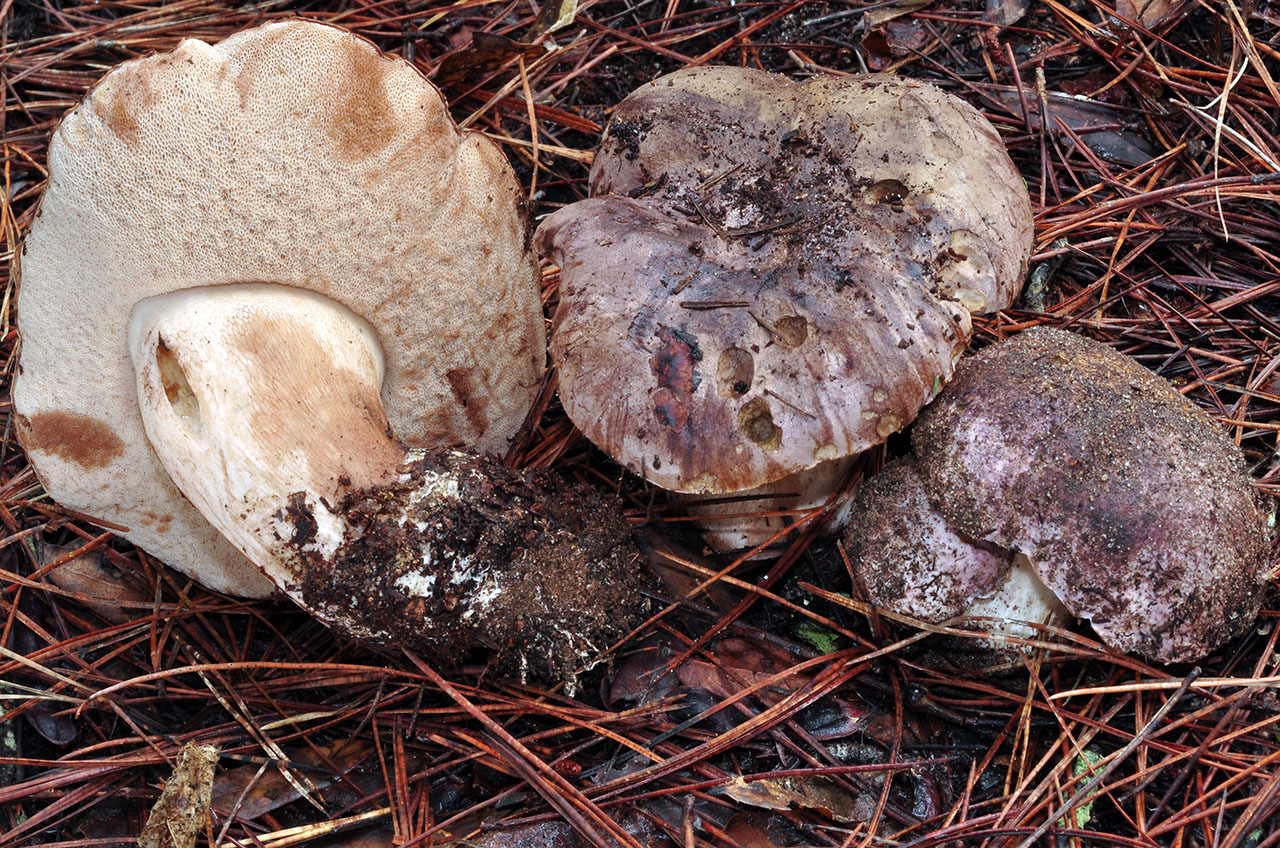
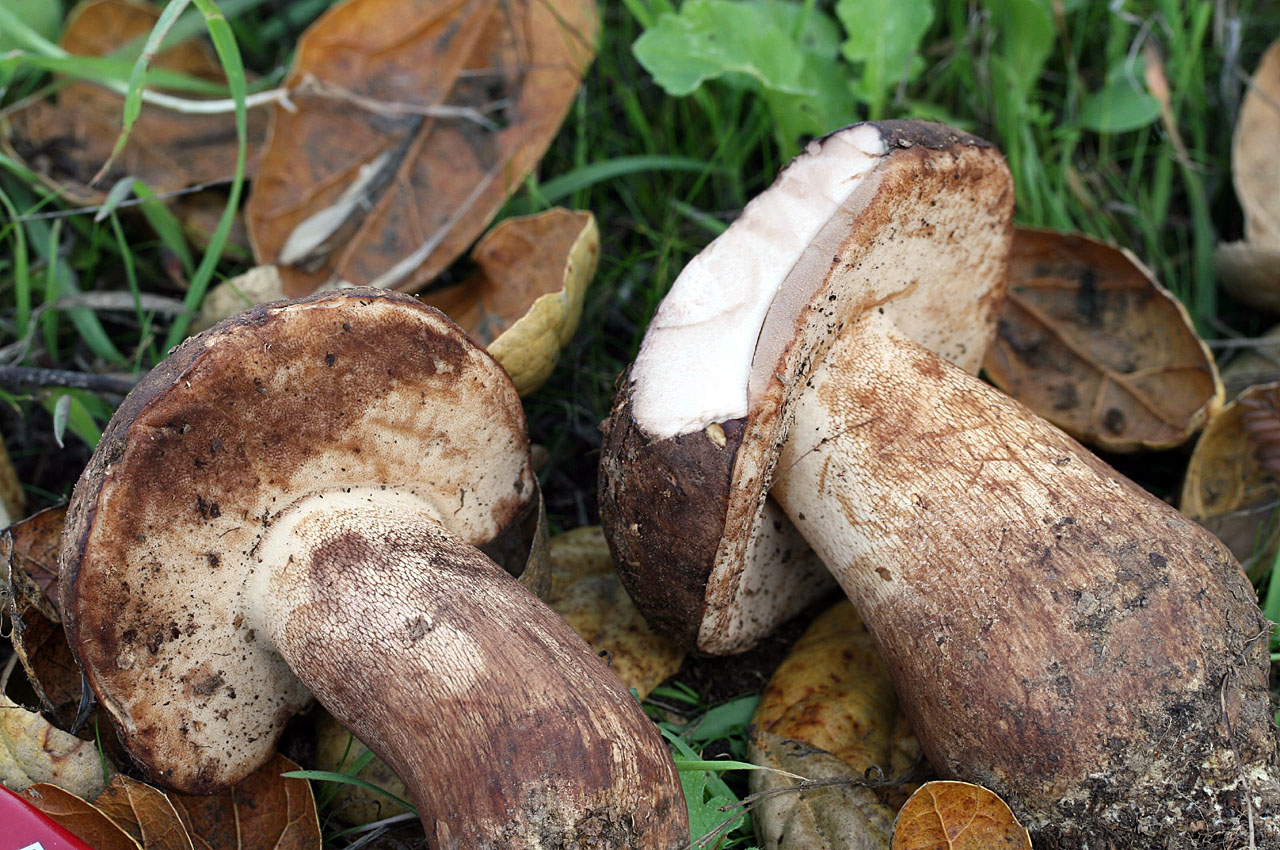
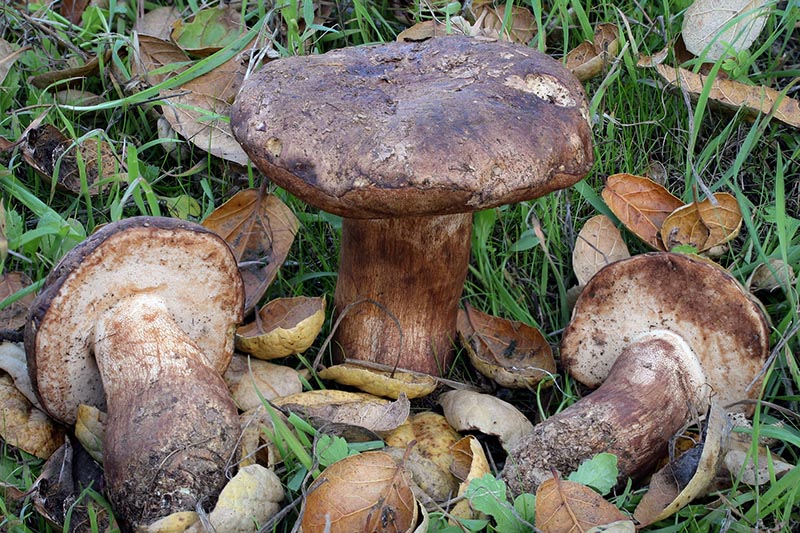
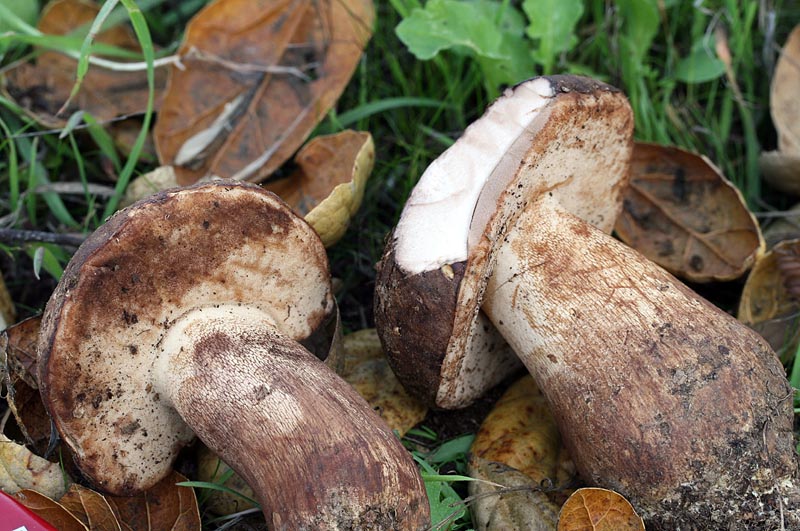
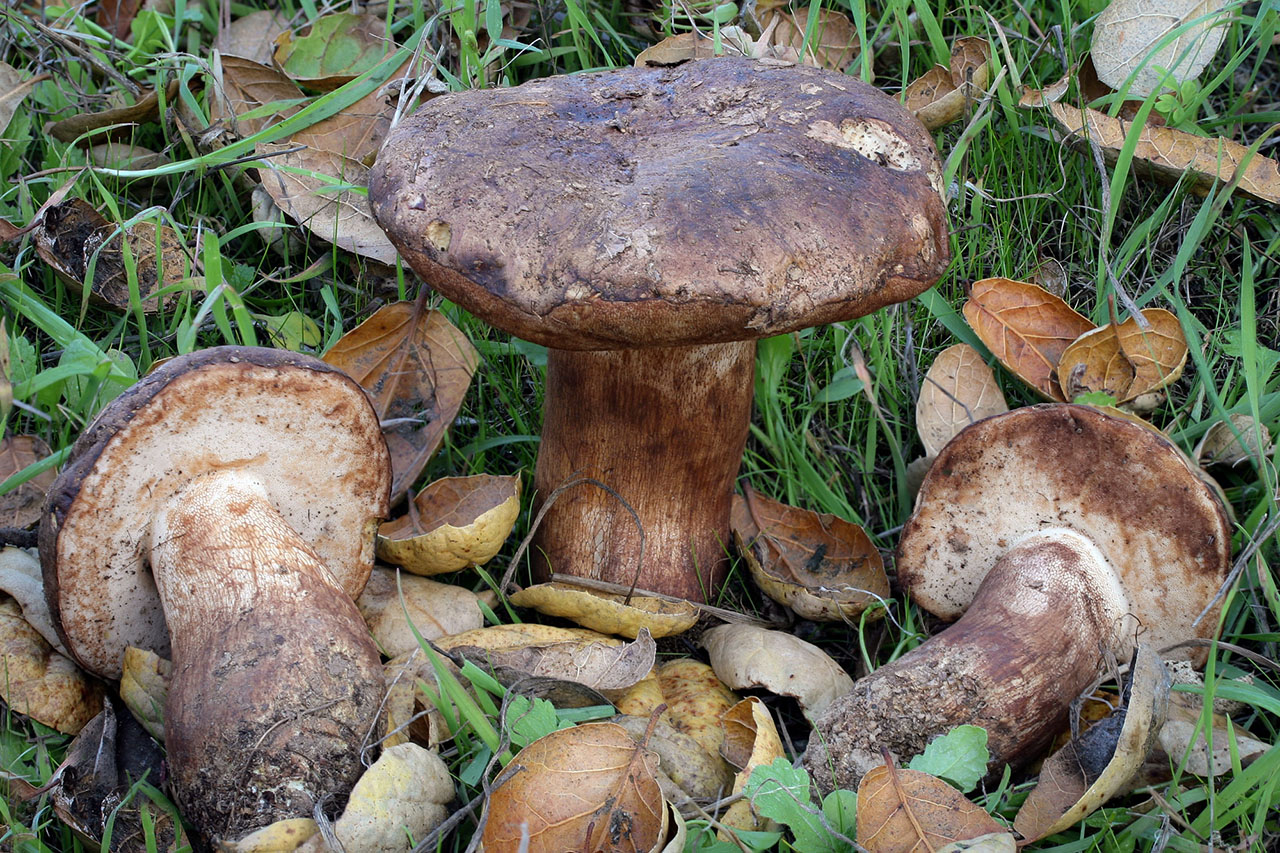
Cap 6-13 (15) cm broad, convex, expanding to plano-convex or plano-depressed in age; margin incurved, becoming decurved to plane, frequently undulate; surface subviscid when moist, matted-tomentose, dingy-tan when young, bruising immediately dark-brown; context 1.5-2.5 cm thick, white, soft, faintly pinkish-tan when cut; odor mild and taste mild.
Pores 1-2 per mm, angular to oval, at first cream-colored, bruising tan to medium-brown; tubes 1.0-1.5 cm long, cream-colored, bruising like the pores, depressed at the stipe.
Stipe 6-12 cm long, 3.0-4.5 cm thick, solid, fleshy, equal to subclavate at the base, the latter well-rooted; surface cream-buff, reticulate at the apex, the reticulations sometimes extending to near the base, bruising brown with handling; context when cut, pale pinkish-buff at base, elsewhere not discoloring, or light brown to greyish- brown; partial veil absent.
Spores 9.0-12.0 x 3.0-4.0 µm , cylindrical, narrowly elliptical, to subfusoid in face-view; sub-fusoid and inequilateral in profile, containing one to several guttules; hilar appendage inconspicuous; spores pinkish-brown in deposit.
Solitary or in small groups under oaks (Quercus spp.), madrone (Arbutus menziesii), and manzanita (Arctostaphylos spp.); known only from coastal forests, possibly present at lower elevations of the Sierra Nevada; fruiting from early to mid-way through the mushroom season; uncommon.
Probably edible.
This robust bolete has a brown cap, reticulate stipe, and pale-colored pores, features that could lead to confusion with Boletus edulis (king bolete) and Boletus regineus (queen bolete). These favorites of pot hunters, however, do not bruise brown, although they may darken with age, and produce olive-brown rather than pinkish-brown spore prints. Tylopilus indecisus should be compared with Tylopilus porphyrosporus, a blackish-brown bolete found regularly in coastal forests north of San Francisco. Although similar in stature, it lacks the stipe reticulations characteristic of Tylopilus indecisus, and has the unusual property of discoloring wax-paper bluish-green. It's interesting to speculate the reason for Charles Peck's choice of the epithet "indecisus" for this bolete. It's possible that he was referring to the strong discoloring of the exterior surface compared to the relatively weak color changes of the cap and stipe context.
Arora, D. (1986). Mushrooms Demystified. Ten Speed Press: Berkeley, CA. 959 p.
Bessette, A.E., Roody, W.C. & Bessette, A.R. (2000). North American Boletes: A Color Guide to the Fleshy Pored Mushrooms. Syracuse University Press: Syracuse, NY. 400 p.
Coker, W.C. & Beers, A.H. (1974). The Boleti of North Carolina. Dover Publications, Inc: New York, NY. 201 p.
Desjardin, D.E., Wood, M.G. & Stevens, F.A. (2015). California Mushrooms: The Comprehensive Identification Guide. Timber Press: Portland, OR. 560 p.
Peck, C.H. (1888). Report of the State Botanist 1887. Ann. Rep. NY State Mus. 41: 51-145. (Protologue)
Siegel, N. & Schwarz, C. (2016). Mushrooms of the Redwood Coast. Ten Speed Press: Berkeley, CA. 601 p.
Smith, A.H. & Thiers, H.D. (1971). The Boletes of Michigan. University of Michigan Press: Ann Arbor, MI. 426 p.
Thiers, H.D. (1975). California Mushrooms—A Field Guide to the Boletes. Hafner Press: New York, NY. 261 p. (WWW)