Clitocybe deceptiva
No. Amer. Sp. Clitocybe I: 108. 1982.
Common Name: anise mushroom
Misapplied name: Clitocybe suaveolens (Schumach.) Fries
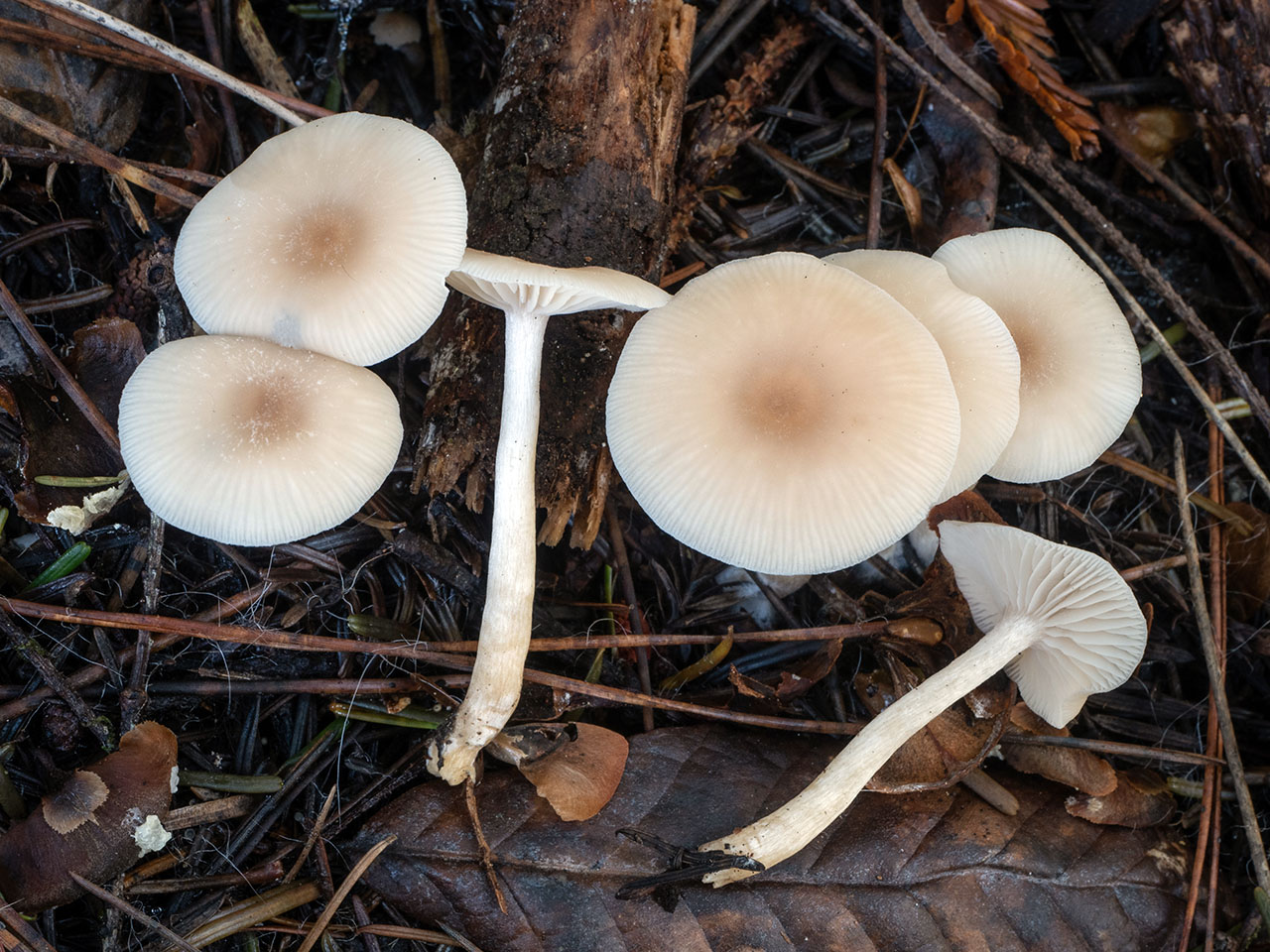
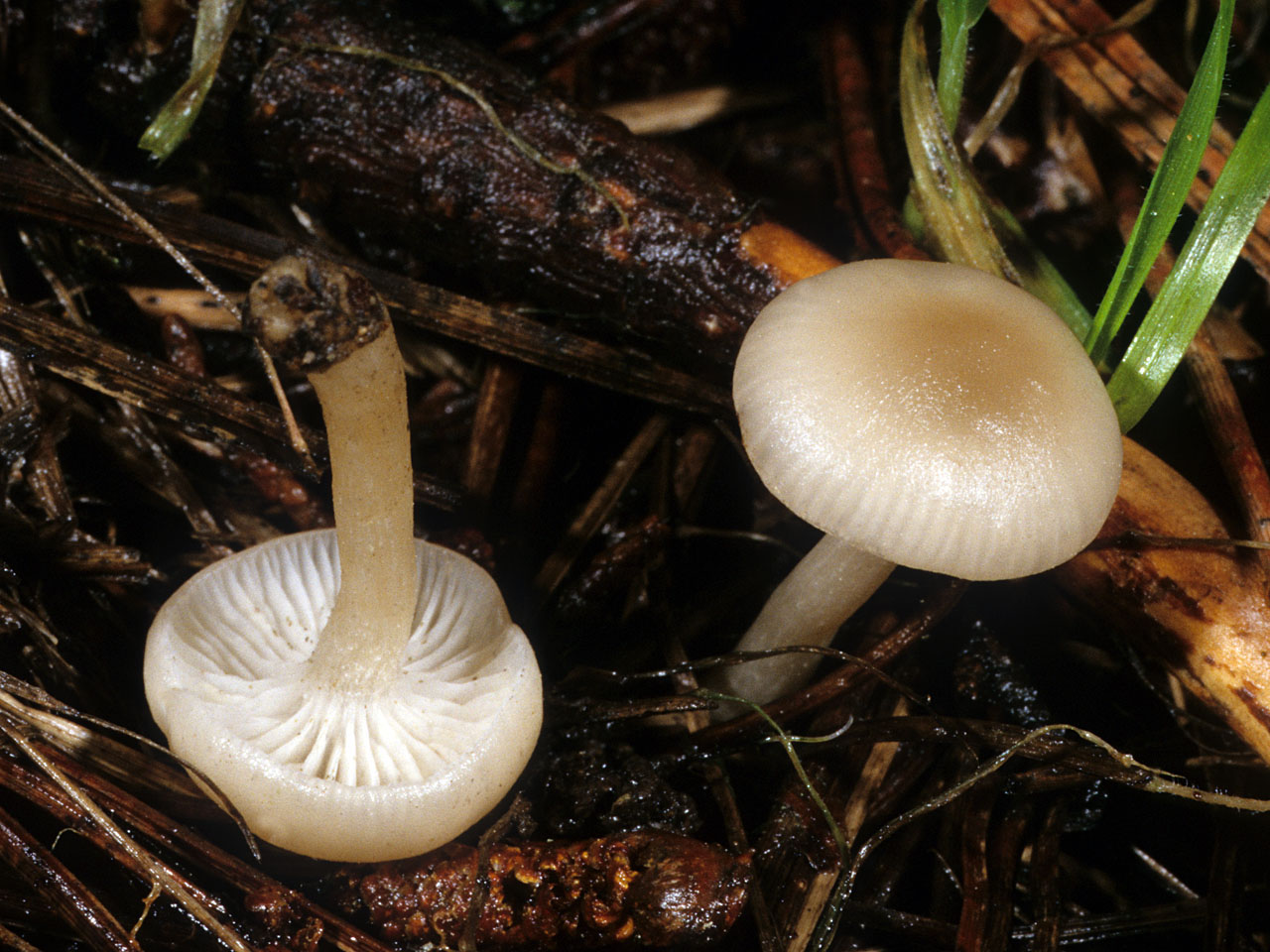
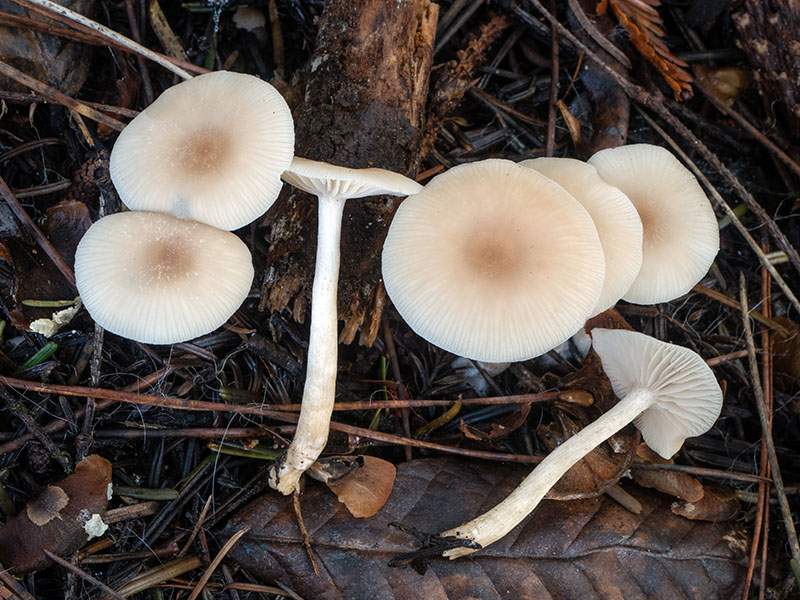
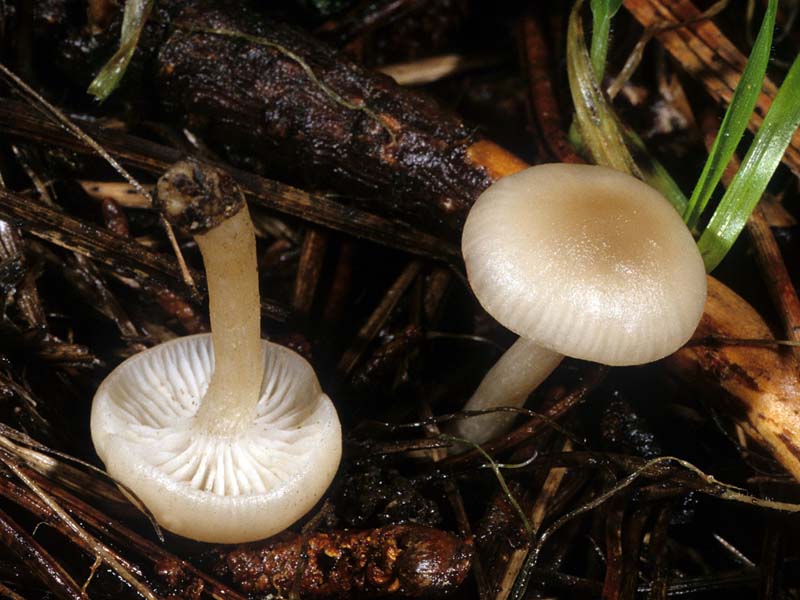
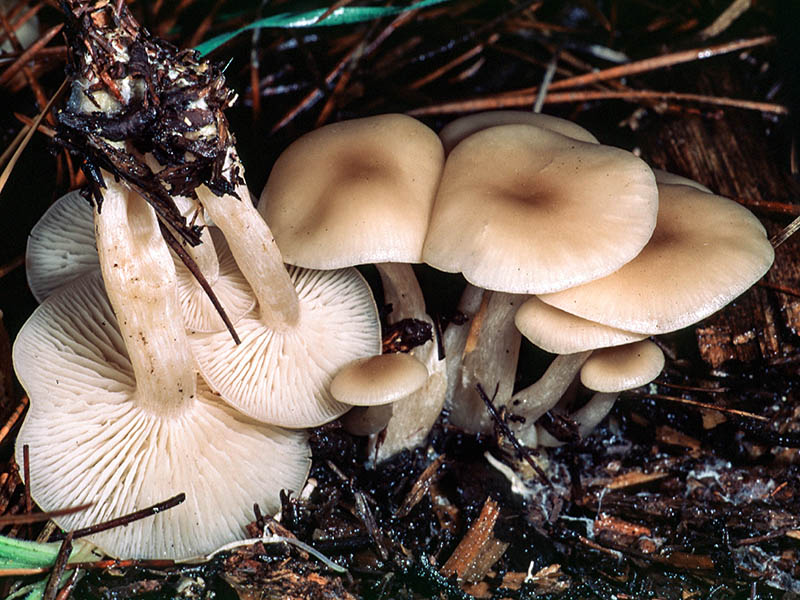
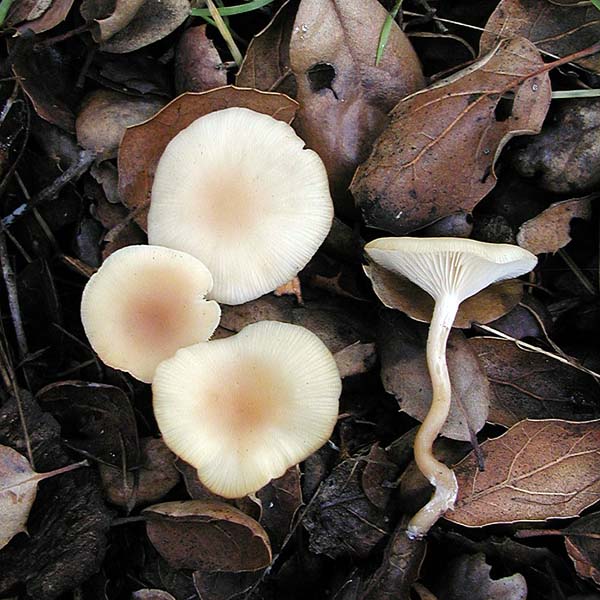
Cap 1.2-5 cm broad, convex expanding to nearly plane, the disc sometimes slightly to moderately depressed; margin at first incurved, finely striate when moist; surface smooth, hygrophanous, pale tan-brown to grey-brown, fading to pale-buff at maturity, the disk remaining slightly darker; flesh thin, colored like the cap, unchanging; odor of anise; taste mild.
Gills adnate to sometimes subdecurrent in age, moderately broad, close, buff-brown at first, milky-white to cream at maturity.
Stipe 1.5-4.0 cm, 3-5 mm thick, stuffed becoming hollow, round, occasionally flattened; more or less equal to slightly enlarged at the base, the latter with cottony mycelium; surface pallid, appressed fibrillose over a pale-buff or pallid background; cortex flesh pale-buff, unchanging; veil absent.
Spores 6-7.5 x 3.5-4 µm, elliptical, smooth, nonamyloid; spore print cream pinkish-buff.
Solitary, scattered or in arcs in conifer duff, especially Monterey cypress (Cupressus macrocarpa) and Monterey pine (Pinus radiata); fruiting from mid to late winter.
 Edible and good, but unsubstantial.
The distinguishing feature of this small, cream-buff mushroom is an unmistakable anise odor. There are several closely related species. Most likely to be encountered is Clitocybe fragrans, a paler mushroom, nearly white, with a "sweet" to anise odor.
Arora, D. (1986). Mushrooms Demystified. Ten Speed Press: Berkeley, CA. 959 p.
Bigelow, H.E. (1982). North American Species of Clitocybe. Part I. J. Cramer: Vaduz, Liechtenstein. 280 p. (Protologue) (PDF)
Desjardin, D.E., Wood, M.G. & Stevens, F.A. (2015). California Mushrooms: The Comprehensive Identification Guide. Timber Press: Portland, OR. 560 p.
Gregory, D. (2007). The genus Clitocybe of California. Masters Thesis. San Francisco State University.