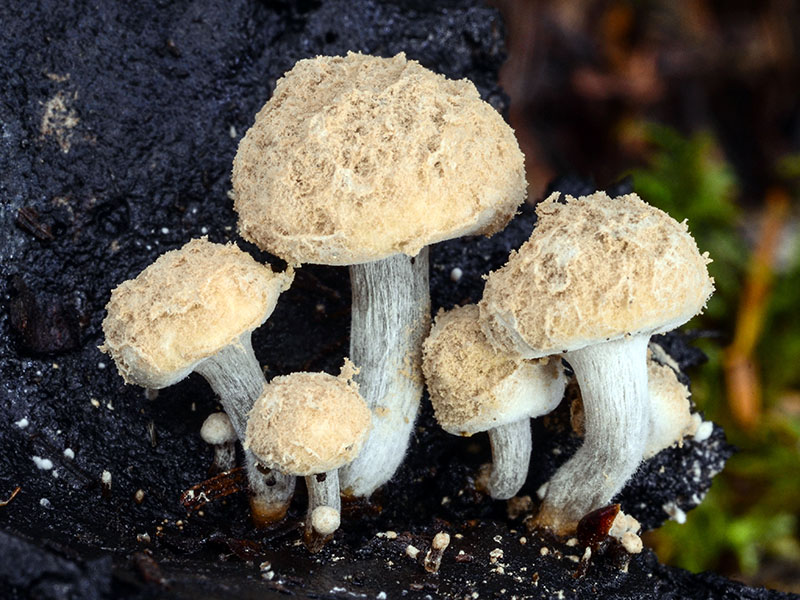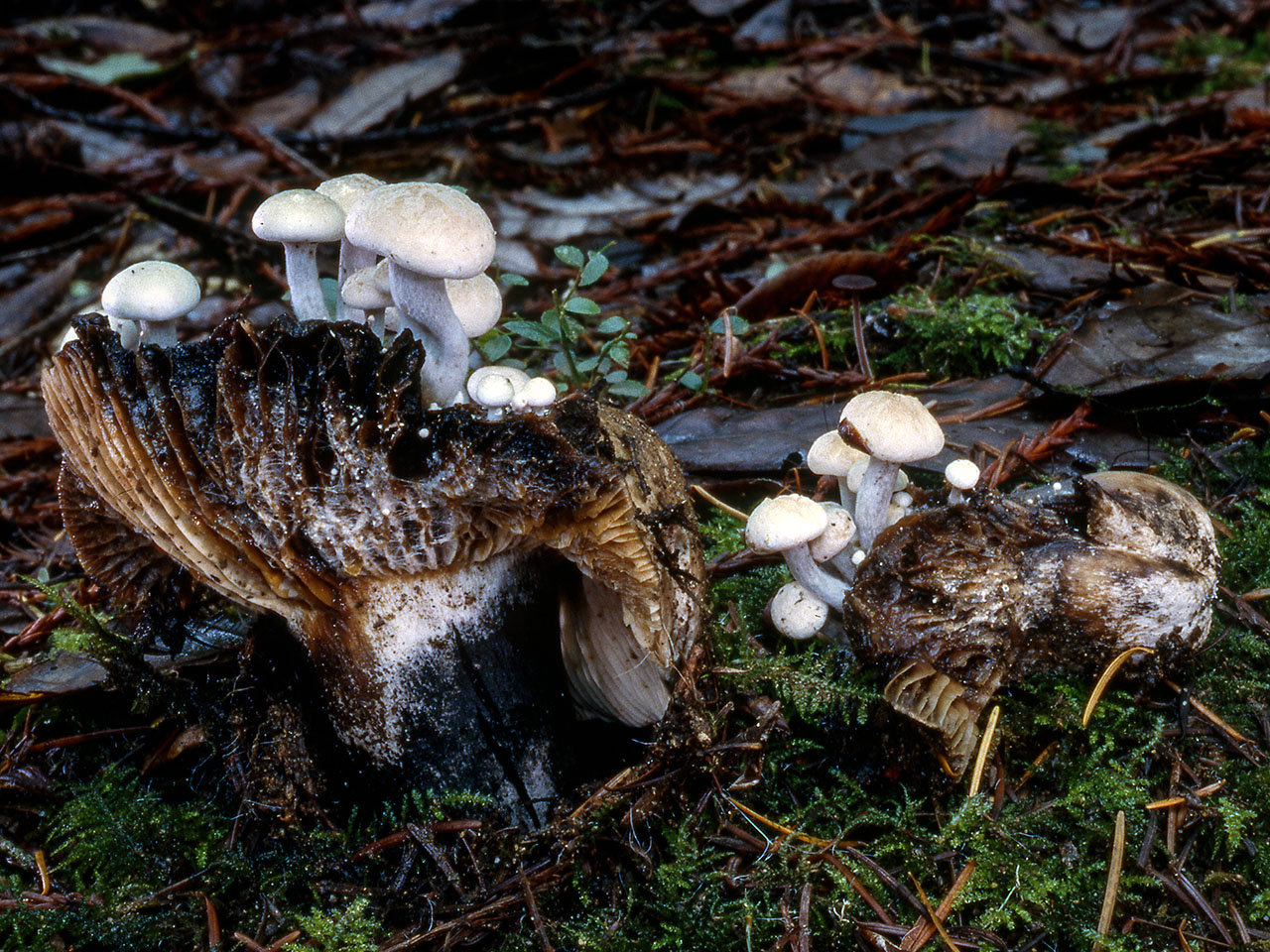
Asterophora lycoperdoides
Neues Journal für die Botanik 3 (3-4): 56
Common Name: none
For description see Castellano et al.
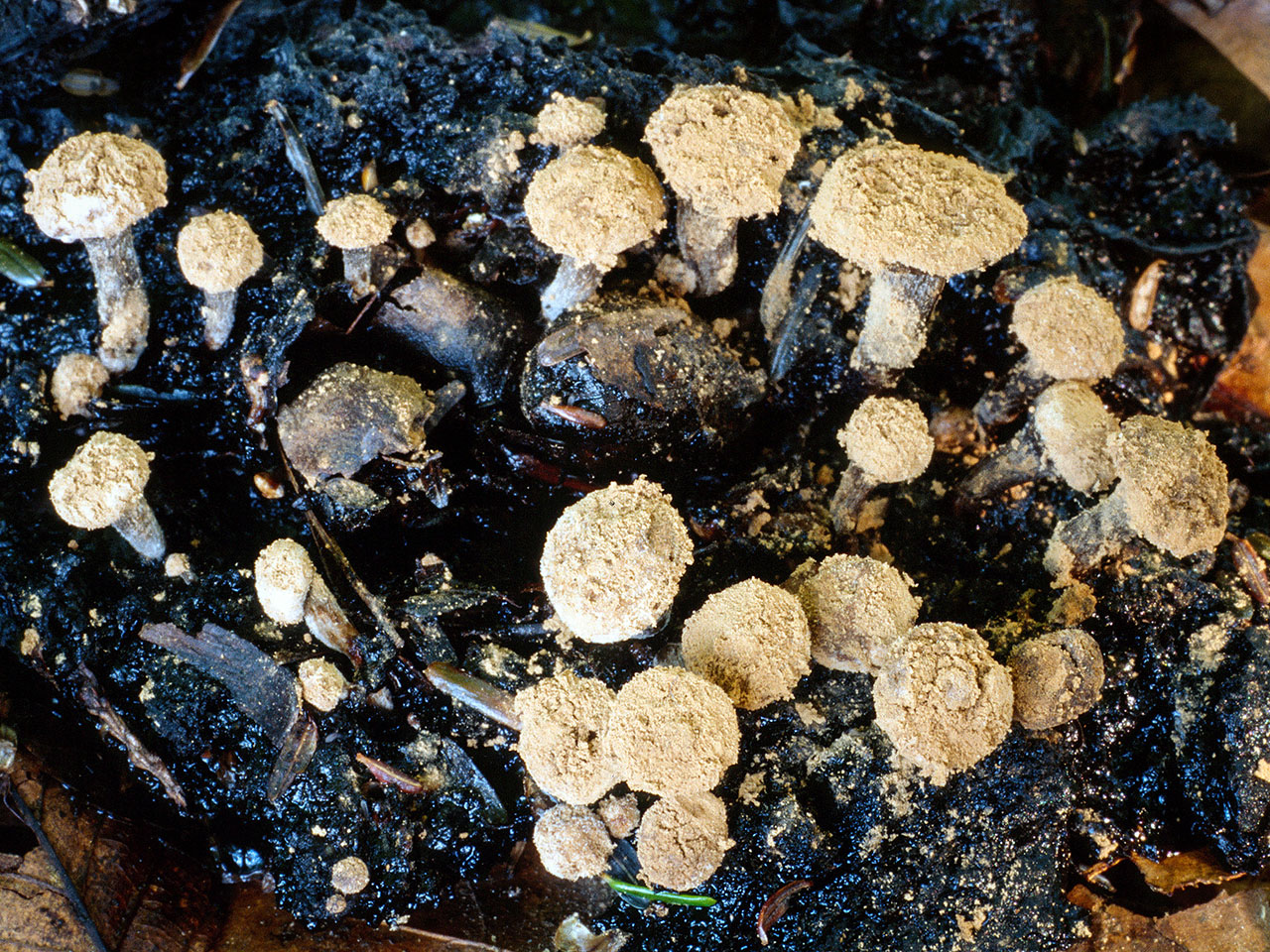
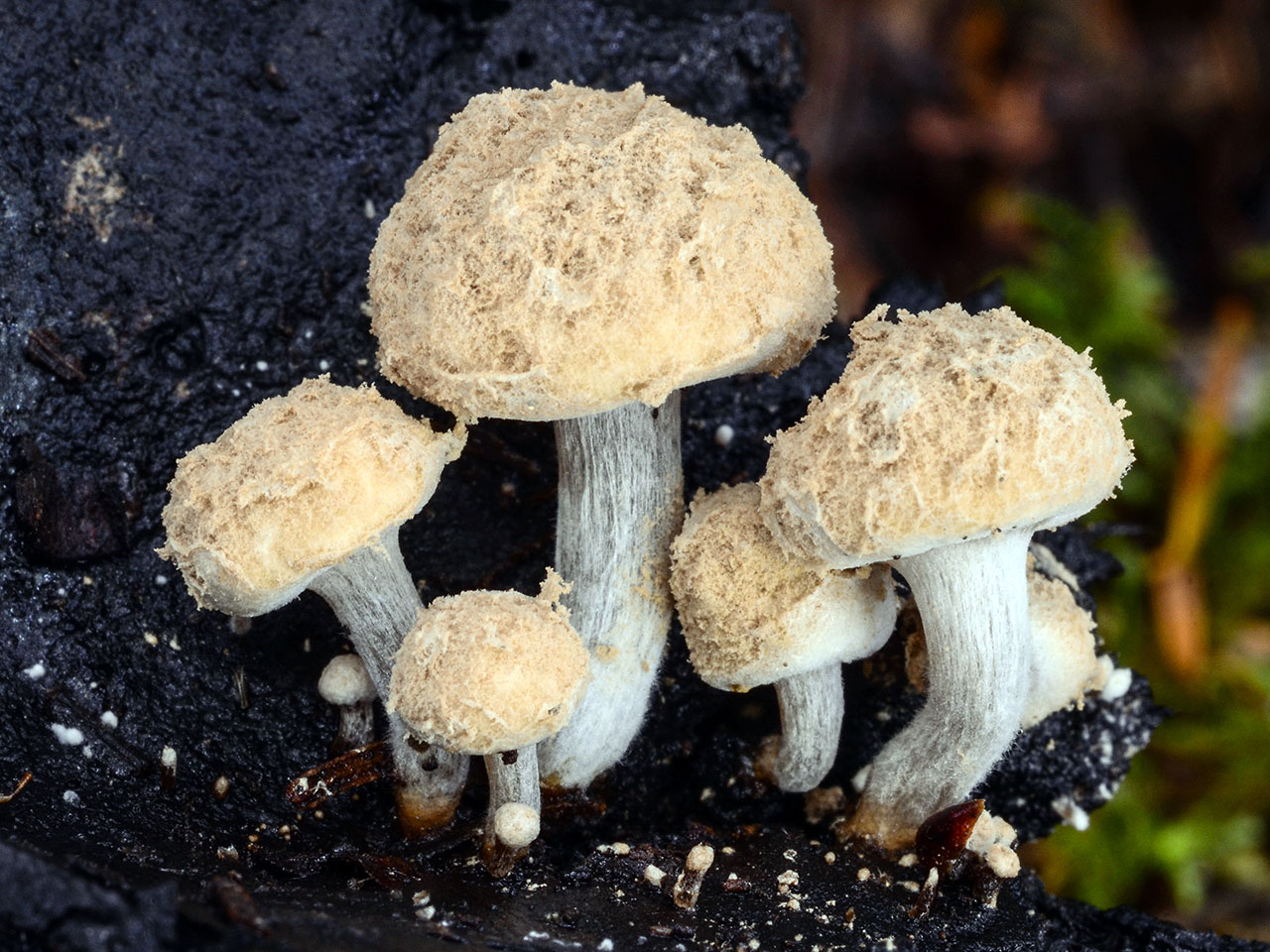
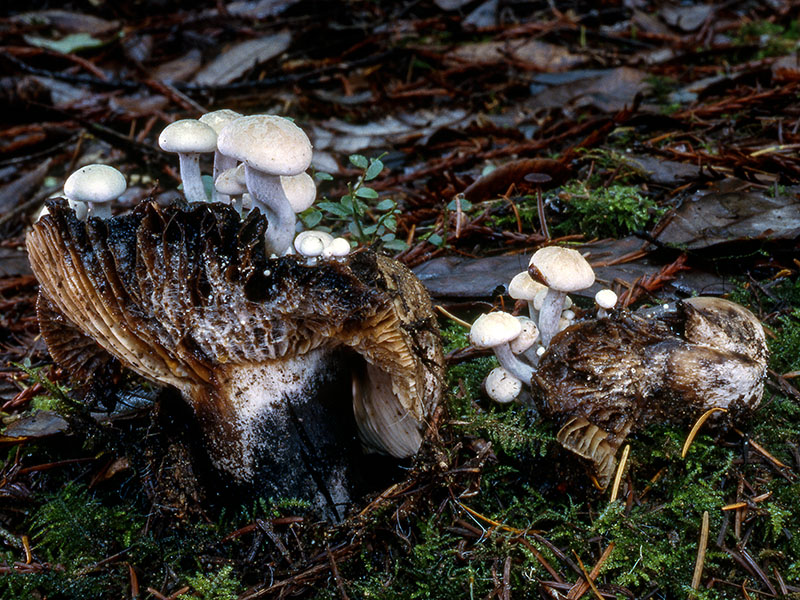
Gregarious on rotting Russulas, summer and early fall. Locally common in the far north coast.
Unknown.
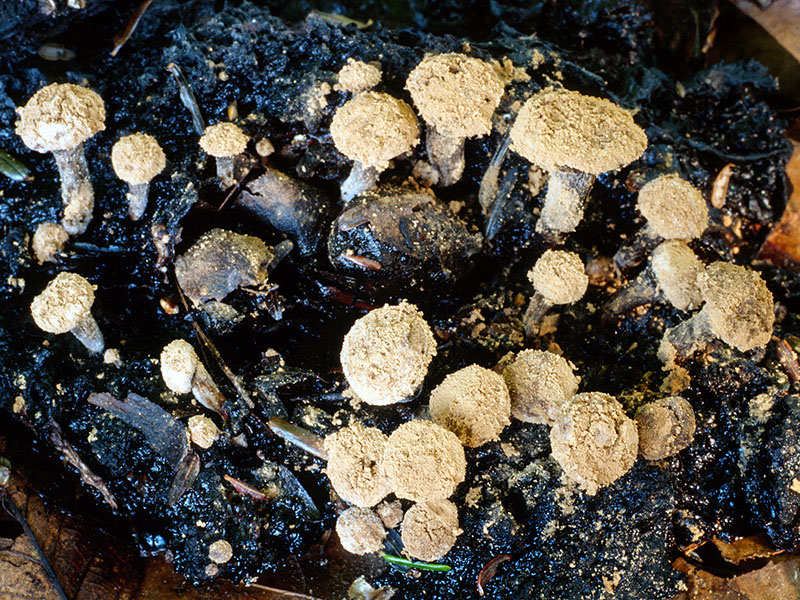
Asterophora lycoperdoides can be distinguished by its white to light brown cap that becomes powdery in age, lack of well defined gills, and growth on rotting mushrooms.
Arora, D. (1986). Mushrooms Demystified. Ten Speed Press: Berkeley, CA. 959 p.
Breitenbach, J. & Kränzlin, F. (1991). Fungi of Switzerland. Volume 3: Boletes and Agarics (1st Part). Strobilomycetaceae, Boletaceae, Paxillaceae, Gomphidiaceae, Hygrophoraceae, Tricholomataceae, Polyporaceae (lamellate). Verlag Mykologia: Luzern, Switzerland. 361 p.
Castellano, M.A., Cázares, E., Fondrick, B. & Dreisbach, T. (2003). Handbook to additional fungal species of special concern in the Northwest Forest Plan (Gen. Tech Rep. PNW-GTR-572). U.S. Department of Agriculture, Forest Service, Pacific Northwest Research Station: Portland, OR. 144 p. (PDF)
McMeekin, D. (1991). Basidiocarp Formation in Asterophora lycoperdoides. Mycologia Mycologia 83(2): 220-223.
Redhead, S.A. & Seifert, K.A. (2001). Asterophora Ditmar ex Link 1809 versus Nyctalis Fries 1825, and the status of Ugola Adanson 1763. Taxon 50: 243-268.
Redhead, S.A. & Seifert, K.A. (2001). Proposal to conserve the name Agaricus lycoperdoides Bull. (= Asterophora lycoperdoides (Bull.) Ditmar) against Asterophora agaricoides Fr.:Fr. and Asterophora lycoperdoides Fr.:Fr. Taxon 50: 279-280.
Siegel, N. & Schwarz, C. (2016). Mushrooms of the Redwood Coast. Ten Speed Press: Berkeley, CA. 601 p.